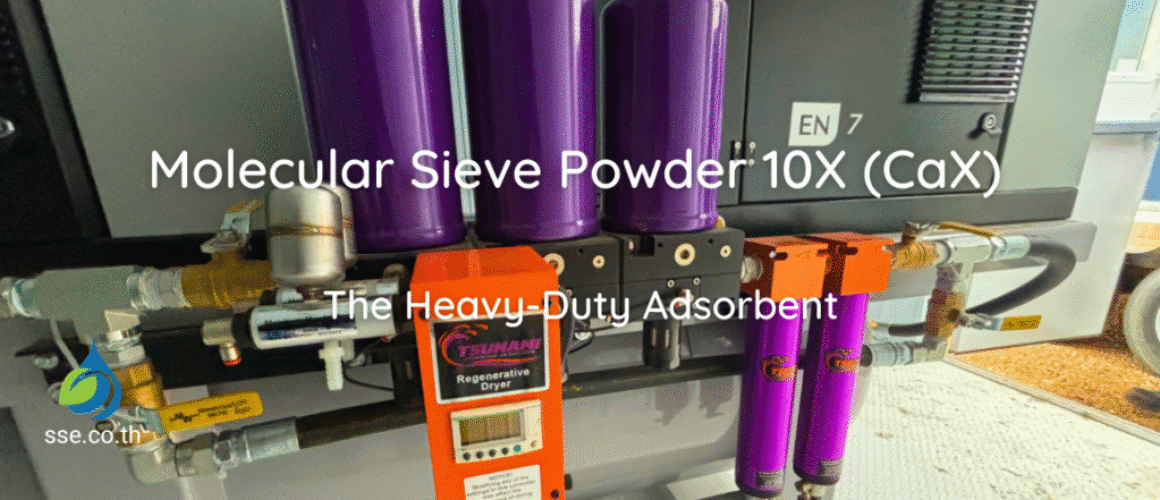
Molecular Sieve Powder 10X (CaX): The Heavy-Duty Adsorbent for Industrial Gas Drying and Refining Applications

Table of Content
“In gas purification, success isn’t about removing water—it’s about removing uncertainty. Molecular sieve powder 10X makes both disappear.”
Molecular Sieve Powder 10x
| Key Takeaways | Details for Engineers & QC Managers |
|---|---|
| What it is | Molecular sieve powder 10X (CaX) is a calcium-exchanged zeolite X with ~10 Å pores for high-capacity adsorption of H₂O, CO₂, H₂S, and light hydrocarbons. |
| Where it shines | Heavy-duty gas purification: refinery dryers, PSA hydrogen, syngas polishing, and LNG pretreatment under high pressure and fluctuating humidity. |
| Why it’s better | Larger pores, strong electrostatic sites (Ca²⁺), rapid kinetics, and robust regenerability deliver stable operation and lower lifecycle cost. |
| How to use | Dose precisely, keep sealed until addition, activate/regen at 250–350°C under dry purge; design around PSA/TSA cycles for long service life. |
| When to choose it | Mixed-contaminant gas streams or high-pressure systems where 3A/4A/5A underperform; pick 13X for air separation and 3A/4A for liquid formulations. |
Introduction – When Ordinary Drying Agents Can’t Keep Up
Molecular sieve powder 10X sits at the center of my most reliable gas-purification upgrades—because molecular sieve powder 10X solves the problems that bring ordinary dryers to their knees. If you’ve ever watched a compressor fight hydrate formation or a catalytic reactor drift off-spec after CO₂ breakthrough, you know the frustration. One site I worked with had a beautiful PSA train on paper, yet weekly purity swings in practice. The culprit wasn’t design—it was using a general-purpose adsorbent where a large-pore, high-affinity material belonged.
| Industry Use Case | Purpose of 10X (CaX) | Performance Benefit |
|---|---|---|
| Refining Gas Drying | Removes H₂O, CO₂ | Prevents corrosion & ice formation |
| Hydrogen Purification (PSA) | Captures CO₂ | Ensures > 99.9 % H₂ purity |
| LNG Pretreatment | Adsorbs H₂O, CO₂ | Prevents hydrate blockages |
| Polymer Production | Maintains anhydrous conditions | Improves molecular weight control |
| Catalyst Drying | Holds trace moisture below 10 ppm | Extends catalyst life |
When the stakes are high—high pressure, variable feed composition, and tight purity targets—conventional desiccants like silica gel or clay top out fast. A zeolite molecular sieve with the right pore size and cation chemistry changes the math. That’s where CaX, known as 10X, is purpose-built to carry the load: high adsorption capacity, selective uptake of CO₂/H₂O/H₂S, and rapid, repeatable regeneration.
What Is Molecular Sieve Powder 10X (CaX)?
At its core, molecular sieve powder 10X is calcium-exchanged type X zeolite—think of it as the Ca²⁺ version of NaX (often referenced with 13X in bead form). As a synthetic zeolite powder, it offers uniform crystals with ~10 angstrom (1.0 nm) pore openings. That size matters: it welcomes not just water, but also larger, troublesome molecules like carbon dioxide and small hydrocarbons.
| Property | Description |
|---|---|
| Chemical Type | Calcium-exchanged Type X (Zeolite CaX) |
| Framework Composition | Na₂O · Al₂O₃ · (2.5 ± 0.5) SiO₂ · xH₂O (after exchange → Ca²⁺ form) |
| Pore Size | ~10 Å (1.0 nm) |
| Adsorption Targets | H₂O, CO₂, H₂S, C₂–C₄ hydrocarbons |
| Moisture Capacity | ~32 wt % at 25 °C, RH = 60 % |
| Thermal Stability | > 550 °C framework integrity |
| Physical Form | Fine activated powder / extrudate / bead |
| Regeneration Temperature | 250–350 °C (dry purge gas) |
| Primary Applications | Refinery gas drying, LNG conditioning, PSA H₂ purification, catalyst support |
The calcium exchange isn’t a cosmetic tweak. Ca²⁺ cations enhance electrostatic fields in the cages, improving affinity for quadrupolar and acidic gases such as CO₂ and H₂S versus smaller-pore A-type sieves. In powder form, the activated zeolite powder disperses into binders, coatings, or catalyst matrices. In pellet/bead form, it packs into fixed beds. Either way, the mission is the same: take contaminants out before they consume energy, poison catalysts, or freeze in cryogenic sections.
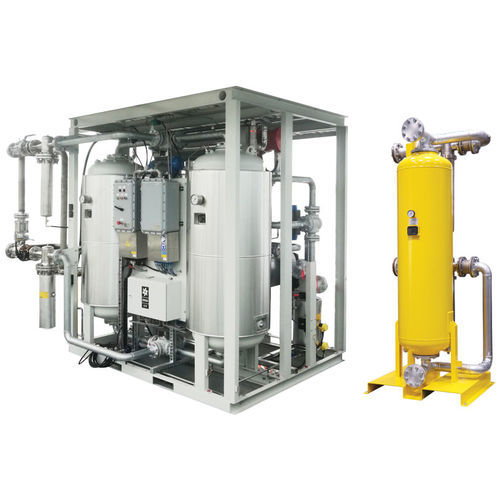
A quick way I explain it to operations teams: if 3A is the scalpel for ultra-selective moisture scavenging and 4A is the generalist for coatings, 10X is the heavy lifter for industrial gas streams with mixed impurities.
The Science Simplified – How Molecular Sieve 10X Works
Molecular sieve powder 10X operates by adsorption—molecules cling to internal surfaces inside precisely structured pores. Unlike absorption (bulk uptake), adsorption is all about surface interactions. The CaX framework offers uniform “parking bays” that favor certain molecules over others by size and polarity. Water and CO₂ fit and stick; nitrogen and methane typically don’t.
There are two practical reasons process engineers love CaX. First, pore size and cation fields give predictable selectivity even when feed composition varies—critical in refinery and gas fields. Second, regeneration is clean and reversible. In TSA (temperature swing adsorption), heating to 250–350°C under dry purge evacuates the pores. In PSA (pressure swing adsorption), depressurization liberates captured species. This reversibility turns a consumable into a durable asset.
In real plant conditions—heat, pressure, cycling—CaX keeps its structure. You get consistent working capacity and breakthrough curves you can trust, shift after shift.
Why 10X Excels in Heavy-Duty Environments
When the pressure rises and the gas composition gets complex, molecular sieve powder 10X pays the bills. Mixed contaminants? No problem: 10X tackles H₂O, CO₂, and H₂S concurrently, and even mops up light hydrocarbons that would slip past smaller-pore sieves. Kinetics are fast, so beds reach spec promptly after regeneration. The framework is non-corrosive and resists attrition, which reduces fines generation and pressure drop spikes over time.
| Parameter | 10X (CaX) | 13X (NaX) |
|---|---|---|
| Cation Type | Ca²⁺ | Na⁺ |
| Affinity | CO₂ > H₂O > H₂S | H₂O > CO₂ |
| Optimal Environment | High-pressure, multi-component gas | Air separation, low-pressure systems |
| Mechanical Strength | High | Moderate |
| Thermal Durability | Excellent | Good |
| Best Used For | Refining & Gas Purification | Oxygen & Nitrogen Generation |
The big differentiator is stability across the full humidity spectrum. Where silica gel stalls at low RH and calcium oxide overreacts, CaX maintains uptake efficiently and predictably. That translates to fewer unplanned regenerations, longer cycles, and lower specific energy per unit of purified gas—exactly what OPEX models prefer.
Comparison table: choosing the right sieve for the job
| Type | Pore Size (Å) | Main Application | Key Adsorbates | Relative Capacity |
|---|---|---|---|---|
| 3A | 3 | Polyurethane, sealants | H₂O only | Medium |
| 4A | 4 | Coatings, adhesives | H₂O, small polar | Medium |
| 5A | 5 | Gas drying, catalysts | H₂O, CO₂, C₃–C₄ | High |
| 10X (CaX) | 10 | Gas purification, refining | H₂O, CO₂, H₂S, hydrocarbons | Very High |
Applications – Where 10X Makes a Difference
From refinery dryers to LNG pretreatment, I’ve seen molecular sieve powder 10X solve issues that once felt inevitable.
Refining and Petrochemical Gas Drying
Catalyst longevity rises when CO₂ and water don’t touch it. CaX upstream of reformers or hydroprocessing steps keeps feeds dry and CO₂-lean, protecting expensive metals. In cryogenic units, it stops icing and hydrates, smoothing operation during load swings.
Hydrogen and Syngas Purification (PSA)
PSA trains depend on adsorbents that grab impurities hard then let go quickly. CaX does both—strong CO₂ and moisture uptake during pressurization, clean release during depressurization. That balance yields stable hydrogen purity and repeatable cycle times.
Natural Gas and LNG Conditioning
For LNG, hydrate avoidance is rule one. CaX removes H₂O and CO₂ under high pressure, mitigating line blockages and corrosion. It also trims heavier components that can upset downstream refrigeration curves.
Catalyst and Polymer Production
As an integrated component in catalyst carriers or as a bed upstream of polymerization, CaX maintains anhydrous conditions that keep chain growth and molecular weight where you designed them. In short: fewer off-spec lots and smoother quality audits.
How 10X Compares to 13X – Two Giants of the Zeolite Family
At first glance, 10X (CaX) and 13X (NaX) share pore size. The difference is how those pores “feel” to incoming molecules. Ca²⁺ sites in CaX enhance selectivity for acidic and quadrupolar gases (CO₂/H₂S), giving CaX an edge in mixed-gas, high-pressure industrial duties. 13X often shows higher total water capacity and is widely chosen for air separation (PSA/VPSA O₂/N₂ preparation).
If your challenge is gas with significant CO₂ and variable hydrocarbons under pressure, choose 10X. If your challenge is deep removal of CO₂/H₂O from air feeds to protect cryogenic columns or to produce medical oxygen, choose 13X. For a deeper dive into 13X use cases, see our previous article: Molecular Sieve Powder 13X: The High-Capacity Adsorbent for Air Separation and Gas Purification.
Handling, Regeneration, and Safety
Even the best adsorbent underperforms if it starts the shift already wet. Treat molecular sieve powder 10X like the precision tool it is.
Storage and handling. Keep drums sealed and use foil-lined bags where possible. Open only when you’re ready to charge. As a fine zeolite desiccant powder, it can be dusty; use standard PPE to avoid inhalation and eye irritation.
Activation and regeneration. For first use or recovery, heat at 250–350°C under a dry inert purge (nitrogen is common). For TSA, maintain adequate dwell time to evacuate deep pore moisture and CO₂; for PSA, validate blowdown and purge steps to match bed size and cycle time. Cool under dry conditions to avoid re-loading before start-up.
Compatibility. CaX is an inorganic, non-corrosive adsorbent and does not migrate or leach in gas systems. In liquid formulations (coatings/sealants), CaX is generally over-capable—3A or 4A is usually the better fit as a moisture scavenger for polyurethane and an adsorbent for sealants and adhesives where moisture control in coatings is required.
Practical Design Insights from the Field
A few patterns I’ve learned to watch for during audits:
- Undersized purge creates apparent “capacity fade.” It’s not the sieve; it’s a partial regen. Validate purge flow and temperature profile across the bed.
- Cycle creep sneaks in when feed RH or CO₂ spikes seasonally. Build buffer into PSA/TSA timing and monitor breakthrough temperature fronts.
- Fines management matters. Proper screening and gentle loading reduce pressure-drop drift and keep beds uniformly active across their cross-section.
- Bed layering can help. In some revamps, layering 5A over 10X catches early moisture while CaX targets CO₂/hydrocarbons—extending cycle times without new vessels.
A Quick Framework for Selecting the Right Powder
Choosing among 3A / 4A / 5A / 10X? Use function first, not habit.
- 3A for the most moisture-sensitive resin and PU systems; it rejects alcohols and amines.
- 4A for general solventborne coatings and adhesives; balanced moisture pickup and compatibility.
- 5A for gas drying with notable CO₂ and C₃–C₄ content; strong selectivity with moderate pore size.
- 10X (CaX) for high-pressure, mixed-impurity gas purification and refining duties; very high capacity and robust cycling.
For background fundamentals and cross-links to the other grades, see our cornerstone: What Is Molecular Sieve Powder and Why It’s Essential for Coatings, Adhesives, and Polyurethane Systems.
Visual concept – how molecular sieve powder captures moisture
If you’re briefing your team, consider a simple infographic: a gas stream enters a packed bed, blue dots (N₂/H₂) bypass the pores, red dots (H₂O/CO₂) enter and hold in the CaX cavities; then a regen step shows the reverse flow/temperature pushing red dots out. Clear, memorable, and perfect for onboarding operators.
On-spec performance, off-spec headaches avoided
A short story: a syngas unit kept missing hydrogen purity by a hair. Operators chased instrument errors, swapped flowmeters, recalibrated analyzers—no change. We profiled the beds and found a shallow regen temperature gradient. After a regen strategy fix and a switch to CaX in the lead bed, breakthrough moved hours to the right. Purity stabilized, and catalyst life projections improved by months. The equipment didn’t get smarter; the adsorbent choice did.
Internal links for deeper product context
- 3A for PU and sensitive formulations: Molecular Sieve Powder 3A
- 4A for coatings and adhesives: Molecular Sieve Powder 4A
- 5A for gas/catalyst focus: Molecular Sieve Powder 5A
- Explore all options: Molecular Sieve
For background reading on adsorption science, see the external overview at Molecular Sieve.
“When operations depend on purity, trust the adsorbent that keeps its shape under pressure—literally. 10X delivers the capacity and resilience that industrial reliability demands.”
Frequently Asked Questions
What is molecular sieve powder 10X (CaX)?
Molecular sieve powder 10X, also known as CaX, is a synthetic zeolite powder in which sodium ions have been exchanged for calcium ions. This gives it a pore size of approximately 10 angstroms, allowing it to adsorb larger molecules such as CO₂, H₂S, and light hydrocarbons. It’s widely used as an industrial drying agent and gas purifier in heavy-duty systems like refineries and hydrogen plants.
How does molecular sieve 10X differ from other zeolite molecular sieves like 5A or 13X?
While 5A and 13X are part of the same zeolite molecular sieve family, 10X offers larger pores and higher selectivity for acidic gases.
5A (CaA type) captures smaller molecules and is ideal for gas separation.
13X (NaX type) focuses on air purification and oxygen production.
10X (CaX) is designed for refining and gas purification, excelling under high pressure with mixed gas contaminants.
What are the main industrial applications of molecular sieve powder 10X?
10X is used across multiple molecular sieve applications, including:
Refinery gas drying and purification
PSA hydrogen and syngas purification
Natural gas and LNG conditioning
Catalyst and polymer production (as a drying agent or support)
High-pressure CO₂ and H₂S removal from hydrocarbon streams
Its robust framework makes it suitable for both static beds and dynamic process cycles.
Why is calcium exchange (CaX) important in molecular sieve 10X?
The calcium ions (Ca²⁺) create stronger electrostatic fields within the zeolite desiccant powder, increasing its affinity for CO₂, H₂O, and sulfur compounds. This modification enhances adsorption strength and mechanical stability, especially in high-pressure environments. It’s what makes CaX a heavy-duty industrial drying agent that withstands harsh process conditions.
Can molecular sieve 10X be used for moisture control in coatings or adhesives?
Although possible, molecular sieve 10X is typically overqualified for coating and adhesive applications. Smaller-pore grades such as 3A or 4A are better suited as an adsorbent for sealants and adhesives or a moisture scavenger for polyurethane systems, where only water removal is required. 10X is optimized for gas-phase drying rather than liquid formulations.
How is molecular sieve powder 10X regenerated for reuse?
10X can be regenerated by heating it to 250–350°C in a dry inert purge gas (TSA) or by lowering the system pressure (PSA). The process removes trapped water, CO₂, and other adsorbates, restoring the activated zeolite powder to full capacity. It can endure hundreds of adsorption–desorption cycles with minimal performance loss.
Is molecular sieve powder 10X safe to handle?
Yes. It is non-toxic, non-corrosive, and chemically inert. Standard industrial precautions apply—use gloves, goggles, and a dust mask when handling fine powder. The material should be stored in sealed containers to prevent premature moisture uptake, as the open synthetic zeolite powder structure will readily adsorb ambient humidity.
What makes 10X particularly suitable for refining and gas purification applications?
Refining and gas-processing streams often contain CO₂, H₂O, and H₂S in varying ratios. Molecular sieve 10X’s large pores (10 Å) and calcium exchange enable it to capture all three simultaneously—something smaller-pore zeolites cannot do efficiently. Its high adsorption capacity, durability, and regenerability make it ideal for continuous gas purification systems in refineries, LNG facilities, and syngas plants.
Can molecular sieve 10X be integrated into catalyst formulations?
Absolutely. In its powder form, 10X acts as a support or binder for active metal catalysts. Its porous structure improves surface dispersion and helps maintain anhydrous environments during catalytic reactions. It’s especially useful in polymerization and hydrogenation processes where trace moisture would otherwise poison the catalyst.
How does molecular sieve powder 10X contribute to operational efficiency?
By reducing contamination-related downtime and maintaining consistent gas purity, 10X helps stabilize reaction conditions and extend equipment life. Its reusability minimizes replacement frequency, and its rapid adsorption kinetics shorten cycle times in PSA/TSA systems. In short, molecular sieve powder 10X doesn’t just dry gas—it improves throughput, safety, and long-term cost efficiency.
Explore More from the Molecular Sieve Powder Series
If you found this article helpful, you’ll enjoy exploring the rest of our molecular sieve series—each post dives into a different grade, its properties, and how it enhances real-world performance across industries:
- What Is Molecular Sieve Powder and Why It’s Essential for Coatings, Adhesives, and Polyurethane Systems
- Molecular Sieve Powder 3A: The Precision Moisture Scavenger for Polyurethane and Sensitive Formulations
- Molecular Sieve Powder 4A: The Versatile Drying Agent for Coatings, Adhesives, and Industrial Formulations
- Molecular Sieve Powder 5A: The High-Performance Adsorbent for Gas Purification and Catalyst Applications
- Molecular Sieve Powder 13X: The High-Capacity Adsorbent for Air Separation and Gas Purification
- Molecular Sieve Powder 10X (CaX): The Heavy-Duty Adsorbent for Industrial Gas Drying and Refining Applications
Each post builds on the last—offering a complete picture of how molecular sieve technology supports coatings, gas purification, and chemical processing with precision and reliability.
Conclusion – Strength in Structure, Precision in Performance
Molecular sieve powder 10X brings structure and selectivity together in a way few materials can match. In refinery dryers, PSA hydrogen polishers, and LNG pretreatment, it sustains purity where lesser adsorbents plateau. Large pores, powerful cation sites, and clean regeneration add up to fewer shutdowns and tighter spec windows.
If your purification challenge involves mixed contaminants under pressure, molecular sieve powder 10X is the practical answer. Pair good material with good operating discipline and you’ll notice the difference in cycle time, energy balance, and catalyst life.
Call to action
Ready to tailor a CaX solution to your process? Explore our full range, request data packs, or book a technical review here: Molecular Sieve.
Disclaimer
The information above reflects typical properties and application guidance for CaX molecular sieve systems. Actual performance depends on feed composition, pressure/temperature, cycle design, and handling. Validate suitability through lab or pilot testing before scale-up. SSE Enterprise Co., Ltd. assumes no liability for misuse or unverified application.
ขอบคุณที่ใช้เวลาอ่านบทความของเราเกี่ยวกับการป้องกันความชื้น ทางเราหวังว่าท่านจะได้รับข้อมูลที่มีคุณค่าและเป็นประโยชน์ ทางเรายินดีให้บริการการปรึกษาฟรีเพื่อพูดคุยเกี่ยวกับความต้องการของท่านและให้คำแนะนำเกี่ยวกับวิธีการป้องกันความชื้นที่กำหนดเฉพาะสำหรับคุณ โปรดติดต่อเราที่ 0858124188 เพื่อนัดหมายการปรึกษาหรือเยี่ยมชมร้านค้าของเราเพื่อค้นหาผลิตภัณฑ์ที่ช่วยป้องกันสินค้าของคุณจากความเสียหายจากความชื้น ทางเราหวังว่าจะได้รับข่าวสารจากท่านเร็วๆนี้