13X Molecular Sieve Powder for Gas Purification, CO₂ Removal, and Adsorbent Formulation

Everything You Need to Know at a Glance
| Item | Practical summary |
|---|---|
| Product/topic | 13X molecular sieve powder, a sodium X-type zeolite powder used as a high-capacity adsorbent material |
| Best used for | Gas purification, CO₂ and moisture removal, air separation support, catalyst carriers, adsorbent formulations, and composite desiccant systems |
| Main problem solved | Helps remove moisture, CO₂, and selected gas impurities from process streams or technical formulations |
| Typical users | Gas-treatment companies, chemical processors, catalyst manufacturers, industrial laboratories, air-separation operators, and procurement teams sourcing molecular sieve materials |
| Key selection factors | Powder or bead form, target gas or impurity, moisture load, operating temperature, pressure, flow rate, regeneration method, and packaging requirements |
| When to contact SSE | Contact SSE when you are unsure whether 13X powder, 13X beads, 5A, 4A, 3A, or another adsorbent is more suitable for your process |
Table of Content
What Is 13X Molecular Sieve Powder?
13X molecular sieve powder is a synthetic zeolite powder based on sodium X-type zeolite. It is usually described as a large-pore molecular sieve, with pore openings commonly stated at about 10 angstroms.
In simple terms, 13X has a highly porous internal structure. These pores allow the material to adsorb certain molecules from gas streams or formulations. It is often considered when the target includes moisture, carbon dioxide, hydrogen sulfide, ammonia, sulfur-containing gases, or selected volatile organic compounds, depending on the operating conditions.
For a broader introduction to molecular sieve grades, see SSE’s Comprehensive Guide to Molecular Sieves. If you are specifically comparing powder-form materials, start with What Is Molecular Sieve Powder.
13X molecular sieve powder is not always the same buying decision as 13X beads or pellets. Powder is usually chosen for formulations, catalyst supports, composite adsorbents, or further processing. For direct packed-bed gas drying, a bead or pellet grade is often more practical.
How 13X Molecular Sieve Powder Works
13X works through adsorption, not absorption.
Absorption is like a sponge taking liquid into its body. Adsorption is different. Molecules attach to the internal surfaces of a porous material. In molecular sieves, the pore size and surface chemistry determine which molecules are attracted, held, and later released during regeneration.
In many industrial systems, 13X is used because it can adsorb more than just water. It is often selected where moisture and CO₂ must be controlled together, or where gas impurities may affect downstream process quality.
| Function | What happens | Why it matters |
| Moisture adsorption | Water molecules are held inside the zeolite pore structure | Helps protect gases, catalysts, and sensitive process streams |
| CO₂ adsorption | CO₂ can be adsorbed under suitable pressure, temperature, and concentration conditions | Useful in air purification, CO₂ control, and some gas-separation systems |
| Mixed impurity control | 13X may adsorb selected polar or larger gas molecules | Can reduce contamination before the gas reaches sensitive equipment |
| Regeneration | Adsorbed molecules can be removed by heat, pressure change, vacuum, or dry purge depending on the system | Allows reuse when the system is designed for regeneration |
For neutral technical background on molecular sieve materials, see this ScienceDirect overview of molecular sieves.
Common Uses of 13X Molecular Sieve Powder
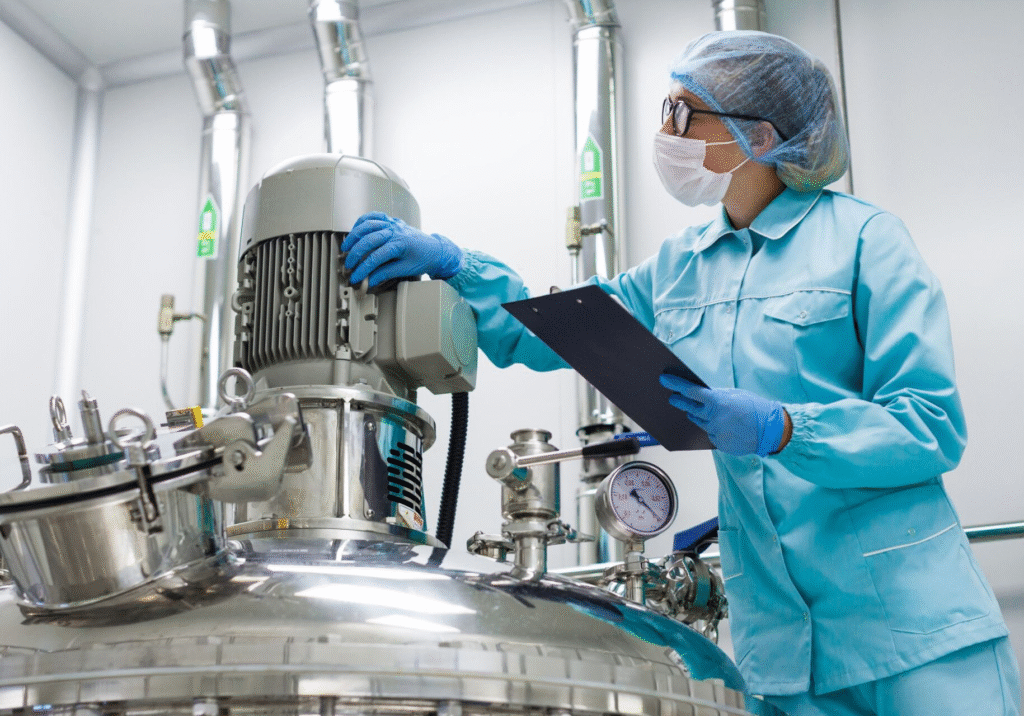
13X powder is useful when a fine zeolite material is needed as part of a larger formulation, adsorbent body, catalyst structure, or engineered treatment system.
| Application | How 13X powder may be used | Practical note |
| Adsorbent formulation | Added into a binder or composite material | Check compatibility, dispersion, and moisture pickup before full production |
| Catalyst support | Used as a porous carrier or support material | Suitability depends on reaction chemistry and operating temperature |
| CO₂ removal studies | Used in lab or pilot adsorbent testing | Test under real gas composition, not only dry laboratory gas |
| Air purification media | Used as part of an engineered adsorbent blend | Powder must usually be processed into a usable form to avoid dust and pressure-drop issues |
| Gas purification systems | May support removal of moisture, CO₂, H₂S, or other gases | For packed beds, shaped beads or pellets are usually easier to handle |
| Composite desiccant products | Used with other desiccant materials to adjust adsorption behavior | Lab trials are needed before claiming final product performance |
Practical example: air separation and oxygen systems
In air-separation systems, moisture and CO₂ are often removed before air reaches sensitive separation steps. If these impurities are not controlled, they may reduce process stability or cause equipment issues.
For direct oxygen generator use, the correct material form matters. Powder may be useful in manufacturing or development work, but many operating systems require shaped molecular sieve beads or pellets. If your application involves oxygen generation, also read SSE’s guide on choosing zeolite molecular sieve for oxygen generators.
Practical example: CO₂ removal and carbon capture work
13X is often considered for CO₂-related applications because of its pore structure and affinity for CO₂ under suitable conditions. However, the correct adsorbent depends on moisture level, CO₂ concentration, pressure, temperature, flow rate, and required outlet quality.
For related reading, see SSE’s article on molecular sieves for carbon capture.
Practical example: catalyst and chemical processing
In chemical processing, moisture and gas impurities can interfere with catalysts, feedstocks, or final product quality. 13X powder may be considered where a fine zeolite adsorbent is needed as part of a catalyst support or process material.
Before use, confirm particle size, moisture content, compatibility with the chemistry, and whether the powder will remain stable under the process temperature and gas conditions.
Powder, Bead, or Pellet: Which Form Should You Choose?
One of the most common mistakes is choosing the right molecular sieve grade but the wrong physical form.
| Form | Best suited for | Main advantage | Main limitation |
| Powder | Formulations, catalyst supports, composite adsorbents, molded adsorbent products, lab testing | Easy to blend into other materials | Dusting, handling, and pressure drop can be a problem in direct gas-flow beds |
| Bead | Packed beds, PSA systems, gas drying columns, oxygen generator systems | Good flow behavior and lower dust than powder | Less suitable for direct blending into formulations |
| Pellet / extrudate | Fixed beds, larger columns, industrial gas purification | Good mechanical handling and bed structure | Must match vessel design and pressure-drop limits |
| Custom blend | Special adsorption or drying requirements | Can combine properties of different adsorbents | Requires testing before production use |
Callout: If gas will flow directly through the material, do not choose powder only because it has high adsorption capacity on paper. For packed beds, particle shape, dust level, pressure drop, and bed loading method can be just as important as the molecular sieve grade.
How 13X Compares with 3A, 4A, 5A, and 10X
Different molecular sieve grades are not interchangeable. Each grade has a different pore size and selection profile.
| Molecular sieve type | Typical pore size | Common use | When it may be a better choice than 13X |
| 3A molecular sieve powder | About 3 Å | Moisture control in polyurethane, sealants, and sensitive formulations | When water must be removed while larger molecules should be excluded |
| 4A molecular sieve powder | About 4 Å | General moisture adsorption in coatings, adhesives, and industrial formulations | When the main issue is water removal in a formulation |
| 5A molecular sieve powder | About 5 Å | Gas purification, hydrogen purification support, and selected hydrocarbon separation | When the process needs a more selective pore size than 13X |
| 13X molecular sieve powder | About 10 Å | CO₂ and moisture removal, air purification support, adsorbent formulation, catalyst support | Best when a larger-pore zeolite is needed for broader adsorption |
| 10X molecular sieve powder | About 10 Å | Heavy-duty gas drying and refining applications | When calcium-exchanged X-type zeolite is more suitable for the target gas stream |
For a wider comparison of molecular sieve families, see SSE’s page on molecular sieve types and applications.
Key Selection Factors Before Buying 13X Molecular Sieve Powder
The correct grade and quantity depend on the process. A safe recommendation cannot be based only on the words “gas purification” or “CO₂ removal.”
| Selection factor | Why it matters | What to prepare before contacting SSE |
| Target impurity | 13X may adsorb moisture, CO₂, and selected gas impurities, but performance depends on conditions | List the gases or impurities you want to remove |
| Gas composition | Water, CO₂, hydrocarbons, sulfur compounds, and oxygen content can change the adsorption behavior | Share the inlet gas composition if available |
| Flow rate | Bed size and contact time depend on how much gas passes through the system | Provide flow rate per hour or per minute |
| Pressure and temperature | Adsorption capacity changes with pressure and temperature | Provide normal and maximum operating conditions |
| Required outlet quality | A rough drying job is different from a tight purity requirement | Share target ppm, dew point, or purity requirement |
| Regeneration method | Regeneration affects working capacity and cycle life | Tell SSE whether the system uses heat, vacuum, pressure swing, or one-time use |
| Physical form | Powder, beads, and pellets behave differently in real equipment | Confirm whether you need powder for formulation or shaped material for a bed |
| Packaging size | Industrial users may need bags, drums, or custom packing | Share expected quantity and handling method |
Short Buying Guidance
Choose 13X molecular sieve powder when:
- You need a large-pore zeolite powder for formulation, adsorbent manufacturing, catalyst support, or technical development.
- Your target includes moisture and CO₂ under suitable conditions.
- You are developing a composite adsorbent or molded desiccant material.
- You need a technical starting point for gas purification or carbon capture testing.
Do not choose 13X powder automatically when:
- Your system is a packed-bed dryer or PSA column that requires beads or pellets.
- Your only target is moisture in polyurethane, coatings, sealants, or adhesives. In many cases, 3A or 4A is more suitable.
- You need a guaranteed outlet purity without running system-specific tests.
- You do not know the feed gas composition, flow rate, pressure, or required outlet specification.
For direct product browsing, see SSE’s molecular sieve product category.
Handling and Storage
13X molecular sieve powder starts adsorbing moisture as soon as it is exposed to air. Good handling is important because a poorly stored material may already be partly loaded before it reaches the process.
Basic handling guidance:
- Keep packaging sealed until use.
- Avoid leaving open bags or drums exposed to humid factory air.
- Use dry, clean tools for transfer.
- Avoid dust generation during pouring or mixing.
- Use suitable PPE such as gloves, eye protection, and a dust mask or respirator based on your workplace safety rules.
- Store away from water, steam, and high-humidity areas.
If the powder is exposed to humid air for too long, part of its adsorption capacity may be used before the product enters your process. For moisture-sensitive work, plan the opening, transfer, and sealing steps before production starts.
Frequently Asked Questions
What is 13X molecular sieve powder?
13X molecular sieve powder is a sodium X-type zeolite powder used as an adsorbent material. It is commonly considered for moisture control, CO₂ removal, gas purification, catalyst support, and adsorbent formulation work.
Is 13X molecular sieve powder the same as 13X beads?
No. The zeolite type may be similar, but the physical form is different. Powder is usually used in formulations, catalyst supports, or composite adsorbents. Beads or pellets are usually more suitable for packed beds, PSA systems, and gas drying columns.
Can 13X molecular sieve powder remove CO₂?
13X is commonly considered for CO₂ adsorption, but the actual result depends on gas composition, pressure, temperature, moisture level, contact time, and regeneration method. Testing is recommended before using it in a production system.
Can 13X molecular sieve powder remove moisture?
Yes, 13X can adsorb moisture. However, if the application is only moisture control in coatings, sealants, adhesives, or polyurethane systems, 3A or 4A may be more suitable.
Is 13X suitable for oxygen generators?
The zeolite grade and physical form must match the oxygen generator design. Many oxygen generator systems use shaped molecular sieve materials rather than powder. Contact SSE with the machine type, bed design, and required oxygen output before choosing.
Can 13X molecular sieve powder be regenerated?
Molecular sieves can often be regenerated by heat, vacuum, pressure swing, or dry purge depending on the system design. The correct regeneration condition should be confirmed for the specific grade and process.
How should 13X molecular sieve powder be stored?
Keep it sealed, dry, and protected from humid air. Open only when ready to use, and reseal remaining material quickly.
Contact SSE for Practical Product Advice
Contact SSE if you are not sure whether 13X molecular sieve powder is suitable for your gas purification system, adsorbent formulation, catalyst support, oxygen generator project, or CO₂ removal application.
To help SSE recommend a practical option, prepare the target impurity, gas composition, flow rate, operating pressure, operating temperature, required outlet quality, preferred product form, and expected order quantity.
SSE can help industrial customers in Thailand compare molecular sieve types, choose between powder and shaped materials, discuss bulk or custom order requirements, and arrange delivery based on the application and order conditions. Free shipping may apply where suitable.
Visit our Molecular Sieve Product Category to request data sheets, samples, or expert guidance. For the foundation behind these materials, read our cornerstone post What Is Molecular Sieve Powder and Why It’s Essential for Coatings, Adhesives, and Polyurethane Systems.
ขอบคุณที่ใช้เวลาอ่านบทความของเราเกี่ยวกับการป้องกันความชื้น ทางเราหวังว่าท่านจะได้รับข้อมูลที่มีคุณค่าและเป็นประโยชน์ ทางเรายินดีให้บริการการปรึกษาฟรีเพื่อพูดคุยเกี่ยวกับความต้องการของท่านและให้คำแนะนำเกี่ยวกับวิธีการป้องกันความชื้นที่กำหนดเฉพาะสำหรับคุณ โปรดติดต่อเราที่ 0858124188 เพื่อนัดหมายการปรึกษาหรือเยี่ยมชมร้านค้าของเราเพื่อค้นหาผลิตภัณฑ์ที่ช่วยป้องกันสินค้าของคุณจากความเสียหายจากความชื้น ทางเราหวังว่าจะได้รับข่าวสารจากท่านเร็วๆนี้