
Molecular Sieves for Carbon Capture and CO₂ Removal in Industrial Gas Systems

Everything You Need to Know at a Glance
| Item | Summary |
|---|---|
| Product/topic | Molecular sieves for CO₂ adsorption, carbon capture support, and industrial gas purification |
| Best used for | Removing CO₂ and moisture from controlled gas streams, especially in PSA, VSA, TSA, biogas upgrading, and gas purification systems |
| Main problem solved | CO₂, water vapor, and selected impurities can reduce gas purity, affect downstream equipment, and make process control harder |
| Typical users | Industrial gas producers, biogas operators, petrochemical plants, hydrogen processors, environmental engineering teams, system builders, and factories with gas treatment requirements |
| Key selection factors | Target gas, CO₂ concentration, moisture load, flow rate, operating temperature, pressure, regeneration method, required outlet purity, and bed design |
| When to contact SSE | Contact SSE when you need help choosing the molecular sieve type, bead size, packaging size, replacement quantity, or product grade for a gas treatment system |
Table Of Contents
What Are Molecular Sieves for Carbon Capture Applications?
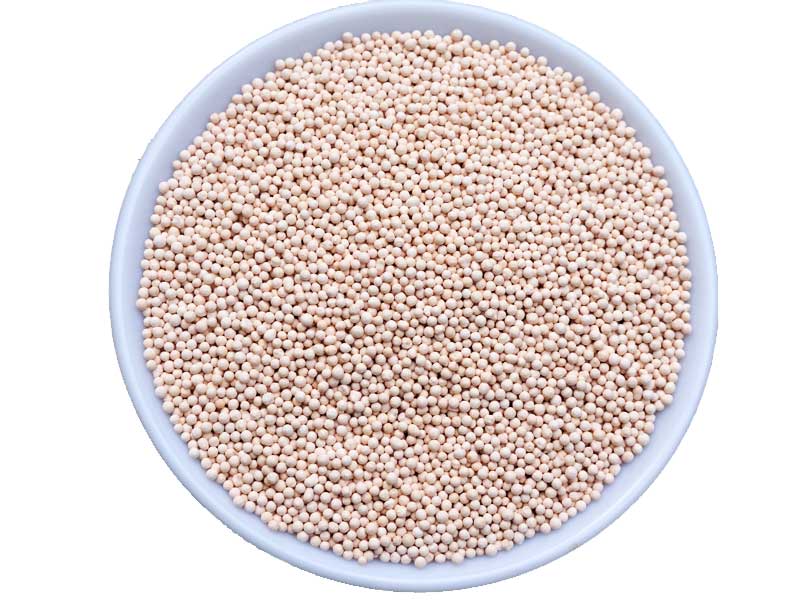
Molecular sieves are porous adsorbent materials, usually based on synthetic zeolite, with very small and uniform pore openings. These pores allow the material to adsorb certain molecules more strongly than others.
In CO₂ removal and carbon capture-related systems, molecular sieves are not normally used as a loose “filter” by themselves. They are usually packed inside an adsorption bed, cartridge, column, dryer, purifier, or gas separation unit. The system controls the gas flow, pressure, temperature, regeneration cycle, and operating time.
For a broader introduction to molecular sieve types and applications, you can read SSE’s comprehensive guide to molecular sieves.
Molecular sieve selection should be based on the actual gas stream, not only on the name of the application. “CO₂ removal” can mean very different things depending on pressure, moisture level, flow rate, and required outlet purity.n trap molecules based on size and polarity. Zeolite-based molecular sieves, particularly types like Molecular Sieves 13X, are highly effective for CO₂ capture and greenhouse gas filtration because of their ability to selectively adsorb gases.
How Molecular Sieves Adsorb CO₂
Molecular sieves work by adsorption. Adsorption means molecules attach to the surface and internal pores of the adsorbent. This is different from absorption, where a substance is taken into the bulk of a liquid or solid.
For CO₂ removal, the adsorption performance depends on several conditions:
| Factor | Why it matters |
| CO₂ concentration | Higher CO₂ levels usually require more adsorption capacity or a larger bed |
| Moisture content | Water vapor can compete strongly for adsorption sites and reduce CO₂ removal performance |
| Operating pressure | PSA and VSA systems use pressure changes to load and regenerate the adsorbent |
| Operating temperature | Adsorption behavior changes with temperature; hot gas may need cooling before treatment |
| Gas composition | Methane, nitrogen, hydrogen, oxygen, sulfur compounds, and VOCs affect material choice |
| Required outlet purity | A rough CO₂ reduction target is different from high-purity gas production |
| Cycle design | Adsorption time, regeneration method, purge flow, and bed size affect performance |
In many systems, moisture must be controlled before CO₂ removal. If the feed gas is wet, the first design question is often not “Which molecular sieve captures CO₂ best?” but “How do we protect the CO₂ adsorbent from water loading?”
Why 13X Is Commonly Used for CO₂ Removal
13X molecular sieve is commonly selected for CO₂ adsorption because it has a larger pore structure than 3A, 4A, and 5A molecular sieves and has strong affinity for CO₂ under suitable conditions. It is often considered for gas purification, CO₂/N₂ separation studies, biogas upgrading systems, and some PSA or VSA designs.
That does not mean 13X is automatically the correct choice for every carbon capture project. The correct adsorbent depends on the gas stream and system design.
For a related technical comparison, see SSE’s article on CO₂ adsorption and N₂ adsorption on adsorbents.
Where Molecular Sieves Are Used for CO₂ and Gas Purification
Molecular sieves can be used in several carbon capture and gas treatment-related applications. In most cases, they are part of a larger engineered system.
| Application | Typical purpose | Molecular sieve role | Common selection point |
| Industrial gas purification | Remove CO₂, moisture, or impurities from gas streams | Adsorb selected molecules before final gas use | Gas composition, pressure, and purity requirement |
| Biogas upgrading | Reduce CO₂ and moisture to increase methane-rich gas quality | Adsorb CO₂ and water vapor in controlled treatment stages | CO₂ level, H₂S presence, moisture load, methane recovery target |
| Hydrogen purification | Remove CO₂, CO, moisture, or other impurities depending on process design | Support PSA or polishing stages | Hydrogen purity target and impurity profile |
| Syngas treatment | Remove selected acidic or polar impurities | Adsorb CO₂ or water depending on bed design | Feed gas variability and regeneration method |
| Environmental gas treatment | Reduce selected gas contaminants in a controlled stream | Capture CO₂ or other molecules under defined conditions | Compliance target, flow rate, and system design |
| Oxygen or nitrogen generation | Separate gases in PSA systems | MSOX or other sieve types may be used depending on gas target | This is different from carbon capture and should not be treated as the same application |
For more on the general gas separation process, read SSE’s guide to gas separation with molecular sieves.
Industrial Gas Purification
In industrial gas purification, molecular sieves may be used to remove CO₂, moisture, or other contaminants before the gas moves into a sensitive process. Examples include purification before catalytic reactions, high-purity gas systems, and process gas polishing.
A practical example:
A factory uses a gas stream that contains CO₂ and moisture. The downstream process is sensitive to both. In this case, SSE would need to know the gas composition, flow rate, pressure, temperature, and target outlet specification before recommending a molecular sieve type or quantity.
Biogas Upgrading
Raw biogas usually contains methane, CO₂, water vapor, and other impurities such as H₂S. Molecular sieves may be used as part of a biogas upgrading system to reduce CO₂ and moisture, helping produce a methane-rich gas stream.
However, biogas is not always clean or stable. If H₂S or heavy moisture is present, pretreatment may be needed before the molecular sieve bed.
For biogas applications, do not choose the adsorbent based only on methane and CO₂. H₂S, water vapor, siloxanes, and operating temperature can strongly affect system performance and adsorbent life.
Hydrogen and Syngas Purification
Molecular sieves are also used in hydrogen purification systems, often as part of PSA units. In these systems, the adsorbent may remove CO₂, CO, moisture, methane, or nitrogen depending on the process design and adsorbent mix.
If your application is hydrogen-related, SSE’s separate article on molecular sieves for hydrogen purification may be more directly useful.
Environmental and Emission-Control Systems
For environmental applications, molecular sieves may support CO₂ capture or gas cleanup in controlled process streams. They are not a universal solution for every exhaust gas or factory emission problem.
Before choosing a product, the system designer should confirm:
- Whether the gas stream is continuous or batch-based
- Whether CO₂ is the main target or one of several contaminants
- Whether moisture, oil mist, sulfur compounds, VOCs, or particulates are present
- Whether the adsorbent will be regenerated or replaced
- Whether the treated gas needs to meet a defined purity or emission requirement
For broader background on responsible use and disposal, see SSE’s article on the environmental impact of molecular sieves.
Choosing the Right Molecular Sieve Type
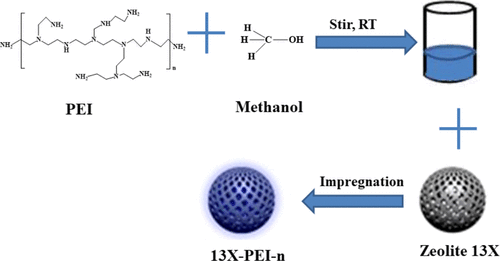
Different molecular sieve types are designed for different molecules and process conditions. A good recommendation depends on what must be removed and what must pass through.
| Molecular sieve type | General pore size | Common role | Suitability for CO₂ removal | Practical note |
| 3A | About 3 Å | Drying polar liquids and selected gases | Low | Mainly used for water removal where larger molecules should be excluded |
| 4A | About 4 Å | General dehydration of gases and liquids | Limited to moderate | Often used for drying, not usually the first choice for CO₂ capture |
| 5A | About 5 Å | Gas separation, drying, hydrogen purification, natural gas treatment | Moderate, application-dependent | Useful in some PSA and purification systems, but not always the main CO₂ adsorbent |
| 13X | About 9–10 Å | CO₂ adsorption, air/gas separation, gas purification | High under suitable conditions | Common starting point for CO₂ removal discussions |
| MSOX series | Application-specific | Oxygen generation and PSA oxygen systems | Not normally selected as the main CO₂ capture product | More relevant to oxygen generation than carbon capture |
For product options, see SSE’s molecular sieve product category.
13X vs 5A for CO₂ Removal
13X is often the better starting point when the main target is CO₂ adsorption. 5A may be more relevant when the system needs a different separation profile, such as hydrogen purification, natural gas treatment, or removal of selected molecules in a PSA process.
| Question | 13X may fit better when… | 5A may fit better when… |
| Main target is CO₂ | CO₂ removal is the main requirement | CO₂ is one impurity among others |
| Gas stream includes hydrogen | May be used in some purification stages | Often considered in PSA hydrogen purification |
| Moisture is present | Pretreatment may be needed | Pretreatment may also be needed |
| System is PSA/VSA/TSA | Can be suitable depending on design | Can be suitable depending on design |
| Need product advice | Share full gas data with SSE | Share full gas data with SSE |
What Information SSE Needs Before Recommending a Product
To recommend a practical molecular sieve option, SSE should know the operating conditions. Without this information, any recommendation is only a rough starting point.
| Information needed | Example customer answer |
| Main gas | Biogas, hydrogen, nitrogen, natural gas, compressed air, syngas |
| Target impurity | CO₂, moisture, CO, H₂S, VOCs, oxygen, nitrogen |
| Feed gas composition | 60% CH₄, 38% CO₂, 2% other gases |
| Flow rate | Nm³/hr, L/min, kg/hr, or other measurable unit |
| Operating pressure | Atmospheric, vacuum, 6 bar, 10 bar, etc. |
| Operating temperature | Ambient, heated, cooled, variable |
| Moisture level | Saturated gas, dew point, ppmv water, or unknown |
| Required outlet quality | Maximum CO₂ %, dew point target, purity target |
| System type | Fixed bed, cartridge, PSA, VSA, TSA, dryer, purifier |
| Regeneration method | Heat, pressure swing, vacuum, purge gas, or replacement only |
| Existing adsorbent | Current type, bead size, quantity, and replacement interval |
Practical Buying Guidance
For most customers, the buying decision should start with the gas stream and the equipment, not the product name.
Basic Selection Guide
| Customer situation | Likely starting point | What to confirm before buying |
| Need CO₂ removal from a dry gas stream | 13X molecular sieve | CO₂ level, flow rate, pressure, outlet target |
| Need CO₂ removal from wet gas | Pretreatment plus 13X may be considered | Water load, dew point, bed design |
| Need hydrogen purification | 5A, 13X, or mixed adsorbent system depending on PSA design | Full impurity profile and purity target |
| Need oxygen generation | MSOX or oxygen PSA material | Generator design and required oxygen output |
| Need general gas drying | 3A, 4A, 5A, or activated alumina depending on gas and moisture target | Dew point target, pressure, temperature |
| Replacing media in an existing unit | Match current specification first | Existing adsorbent type, bead size, quantity, and equipment manual |
If moisture removal is the main issue, activated alumina for moisture removal may also be worth comparing, depending on the system.
Common Selection Mistakes
| Mistake | Why it causes problems | Better approach |
| Choosing only by pore size | Pore size alone does not define performance | Check gas composition, pressure, temperature, and target purity |
| Ignoring moisture | Water can occupy adsorption sites and reduce CO₂ capacity | Confirm moisture load and consider pretreatment |
| Treating carbon capture as simple filtration | Adsorption systems need correct flow and regeneration design | Work from the equipment design and operating cycle |
| Using oxygen PSA material for CO₂ capture | Oxygen generation and CO₂ removal have different goals | Match the adsorbent to the gas separation task |
| Copying another plant’s media choice | Similar applications can have different gas conditions | Compare actual operating data before ordering |
| Not checking bead size | Wrong bead size can affect pressure drop and bed behavior | Match equipment requirements and existing media |
If you are replacing molecular sieve in an existing system, the safest starting point is the current media specification: type, bead size, quantity, and the equipment maker’s recommendation.
Practical Examples
Example 1: CO₂ Removal from a Controlled Industrial Gas Stream
A plant has a dry gas stream with CO₂ above its process limit. The system designer wants to reduce CO₂ before the gas enters downstream equipment.
Possible approach:
- Confirm gas composition and CO₂ level
- Confirm pressure, temperature, and flow rate
- Check whether moisture or oil is present
- Select a suitable adsorbent, often starting with 13X for CO₂ adsorption
- Confirm bed size, cycle time, and regeneration method
SSE can help with the adsorbent selection, but the final system design should be confirmed by the equipment designer or process engineer.
Example 2: Biogas Upgrading
A biogas operator wants to improve methane-rich gas quality by reducing CO₂ and moisture.
Possible approach:
- Test raw biogas composition
- Check H₂S and water vapor levels
- Consider pretreatment before the molecular sieve bed
- Select adsorbent based on methane recovery target and operating cycle
- Confirm whether the media will be regenerated or replaced
In this case, molecular sieve selection should not be separated from the overall biogas treatment design.
Example 3: Hydrogen Purification
A hydrogen system contains CO₂, moisture, and other impurities. The customer asks whether 13X or 5A is better.
Possible approach:
- Confirm hydrogen purity target
- Identify all impurities, not only CO₂
- Confirm whether this is a PSA system or a polishing bed
- Check pressure, temperature, and regeneration cycle
- Choose the adsorbent or adsorbent combination based on the full impurity profile
For hydrogen systems, 5A and 13X may both be relevant depending on the separation task.
Limitations and Handling Notes
Molecular sieves are strong industrial adsorbents, but they are not suitable for every CO₂ capture situation.
Important limitations include:
| Limitation | Practical meaning |
| Moisture sensitivity | Water vapor may reduce CO₂ adsorption capacity if not managed |
| Regeneration requirement | Many systems need heat, vacuum, pressure swing, or purge gas to restore capacity |
| Bed design matters | Product performance depends on bed depth, flow distribution, pressure drop, and contact time |
| Feed gas contamination | Oil, particulates, sulfur compounds, and heavy contaminants can shorten media life |
| No universal dosage | Quantity depends on flow rate, gas composition, target purity, and cycle time |
| Not a stand-alone climate solution | Molecular sieves are only one part of a carbon capture or gas treatment system |
For a general look at adsorption and regeneration steps, see SSE’s guide to molecular sieve adsorption and regeneration processes.
Frequently Asked Questions
What molecular sieve is best for CO₂ removal?
13X molecular sieve is often the first type considered for CO₂ adsorption. However, the correct choice depends on the gas composition, moisture level, pressure, temperature, flow rate, and required outlet quality.
Can molecular sieves capture CO₂ from air?
Molecular sieves can adsorb CO₂, but direct air capture is a much more demanding application because CO₂ concentration in air is low and moisture can interfere. Direct air capture needs a properly designed system, not only adsorbent media.
Can 5A molecular sieve remove CO₂?
5A molecular sieve can be used in some CO₂ removal and gas purification systems, especially where the separation target includes other molecules. For CO₂-focused applications, 13X is often the more common starting point.
Is 3A molecular sieve suitable for carbon capture?
3A molecular sieve is mainly used for drying applications, especially where water must be removed while larger molecules are excluded. It is usually not the main choice for CO₂ capture.
Do molecular sieves need regeneration?
In many industrial systems, yes. Molecular sieves are often regenerated using heat, pressure swing, vacuum, or purge gas. Some smaller or simpler systems may replace the media instead of regenerating it.
How much molecular sieve do I need?
There is no safe universal quantity. The required amount depends on gas flow rate, CO₂ concentration, moisture level, target outlet purity, adsorption cycle time, and bed design. SSE can help estimate a practical starting point when this information is available.
Can molecular sieves remove both CO₂ and moisture?
Yes, but water vapor can compete strongly for adsorption sites. In many systems, moisture control should be handled before or alongside CO₂ removal.
Are molecular sieves used in biogas upgrading?
Yes. Molecular sieves may be used as part of biogas upgrading systems to remove CO₂ and moisture. However, H₂S, water vapor, siloxanes, and other contaminants should be checked before selecting media.
Are molecular sieves the same as activated carbon?
No. Molecular sieves are zeolite-based adsorbents with uniform pore structures. Activated carbon has a broader pore distribution and is often used for odor, VOCs, and organic vapor adsorption. The better choice depends on the target contaminant.
“By utilizing molecular sieves in our biogas upgrading facility, we were able to meet stringent fuel-grade standards while significantly reducing impurities. This process supports renewable energy initiatives and a lower carbon footprint.”
Contact SSE for Product Advice
Choosing molecular sieves for CO₂ removal is not only a product decision. It is a process decision. The correct option depends on the gas composition, operating pressure, temperature, moisture level, flow rate, target purity, and regeneration method.
Contact SSE if you are not sure which molecular sieve type, bead size, or quantity is suitable for your carbon capture, gas purification, biogas upgrading, hydrogen purification, or industrial drying system. Our team can help you compare practical options based on your process conditions, equipment type, packaging needs, and bulk or custom order requirements.
SSE supplies molecular sieves and related moisture-control materials for industrial customers in Thailand, with practical product advice, fast delivery, bulk/custom order support, and free shipping when applicable.
For more insights, explore A Comprehensive Guide to Molecular Sieves. If you’re ready to enhance your operations with molecular sieves, check out our Molecular Sieve Product Page. See also our page on the Environmental Impact of Molecular Sieves and Molecular Sieves in Green Energy Production.
ขอบคุณที่ใช้เวลาอ่านบทความของเราเกี่ยวกับการป้องกันความชื้น ทางเราหวังว่าท่านจะได้รับข้อมูลที่มีคุณค่าและเป็นประโยชน์ ทางเรายินดีให้บริการการปรึกษาฟรีเพื่อพูดคุยเกี่ยวกับความต้องการของท่านและให้คำแนะนำเกี่ยวกับวิธีการป้องกันความชื้นที่กำหนดเฉพาะสำหรับคุณ โปรดติดต่อเราที่ 0858124188 เพื่อนัดหมายการปรึกษาหรือเยี่ยมชมร้านค้าของเราเพื่อค้นหาผลิตภัณฑ์ที่ช่วยป้องกันสินค้าของคุณจากความเสียหายจากความชื้น ทางเราหวังว่าจะได้รับข่าวสารจากท่านเร็วๆนี้